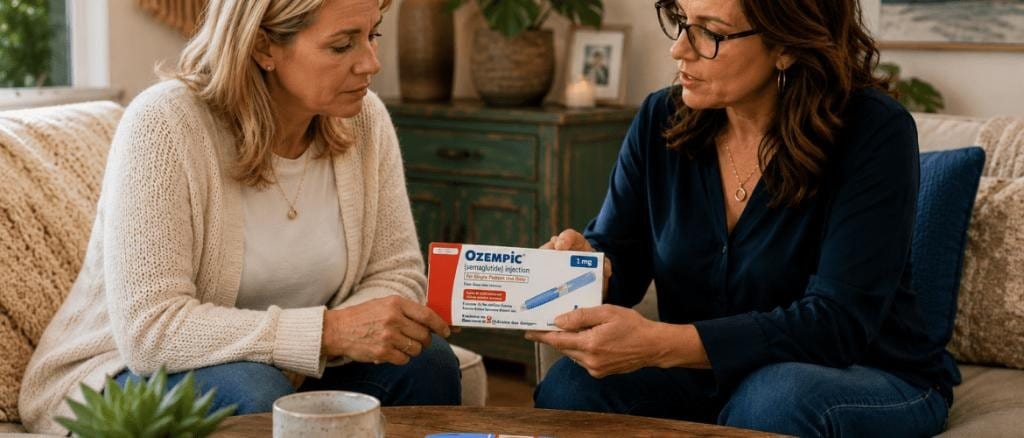
Ozempic and alcohol cravings has become one of the most talked-about topics in addiction medicine and recovery circles. People taking semaglutide (Ozempic, Wegovy) and other GLP-1 receptor agonists for diabetes or weight loss are reporting something unexpected: a significant reduction in their desire to drink alcohol. Some describe it as the "noise" around alcohol simply going quiet.
For people in recovery — and for the families and professionals who support them — this raises important questions. What does the research actually say? Could GLP-1 medications become a tool in addiction treatment? And what does this mean for people who are already in recovery or considering their options?
Important Note
This article is educational and should not be interpreted as medical advice. Any decisions about medication should be made in consultation with a qualified medical professional who understands your full medical history and recovery situation.
What Are GLP-1 Medications?
GLP-1 receptor agonists are a class of medications that mimic the action of glucagon-like peptide-1, a hormone that regulates blood sugar, appetite, and digestion. Semaglutide (sold as Ozempic for diabetes and Wegovy for weight loss) and liraglutide (Victoza, Saxenda) are among the most widely prescribed. They work primarily by slowing gastric emptying, reducing appetite, and increasing feelings of fullness.
Their dramatic effectiveness for weight loss has made them among the most prescribed medications in the world. But the reports of reduced alcohol cravings were largely unexpected — and they have generated significant scientific interest.
What People Are Reporting
Anecdotal reports from people taking GLP-1 medications describe a reduction in the desire to drink that feels qualitatively different from willpower or conscious effort. People describe simply not thinking about alcohol as much, not feeling the pull toward it in social situations, and finding that the reward they previously associated with drinking has diminished.
These reports are not limited to people with alcohol use disorder. People who were moderate drinkers, heavy social drinkers, and people in recovery have all described similar experiences. The consistency of these reports across different populations has attracted serious scientific attention.
What the Research Says
The research on GLP-1 medications and alcohol use is still early but genuinely interesting. Animal studies have consistently shown that GLP-1 receptor agonists reduce alcohol consumption and preference in rodent models. Human studies are more limited but suggestive.
A 2023 study published in JCI Insight examined semaglutide in mice and rats and found reduced alcohol intake in the tested animal models. These findings supported further clinical research; the study itself was not a human clinical trial. A larger randomized controlled trial investigating semaglutide specifically for alcohol use disorder is currently underway.
The proposed mechanism involves the reward pathways in the brain. GLP-1 receptors are present in areas of the brain associated with reward and motivation — including the nucleus accumbens and the ventral tegmental area. By modulating activity in these areas, GLP-1 medications may reduce the rewarding properties of alcohol, making it less appealing.
This is genuinely promising. But it is important to be clear: the research is preliminary. We do not yet have large, well-designed randomized controlled trials establishing that GLP-1 medications are safe and effective treatments for alcohol use disorder. The anecdotal reports and early studies justify further research — they do not justify treating these medications as proven addiction treatments.
What This Does Not Mean
Even if GLP-1 medications do reduce alcohol cravings, this does not mean they are a cure for alcohol use disorder or a replacement for comprehensive recovery support. Alcohol use disorder involves far more than craving — it involves habits, relationships, emotional regulation, trauma, identity, and the entire lifestyle that surrounds drinking.
Reducing cravings is valuable. But someone whose cravings are reduced by medication still needs to rebuild their relationships, develop healthy coping strategies, create new routines, and build a life that supports sobriety. A medication that quiets the noise around alcohol does not automatically teach someone how to live without it.
Important Considerations for People in Recovery
If you are in recovery and considering GLP-1 medications — whether for diabetes, weight loss, or with the hope of reducing alcohol cravings — there are several important considerations:
- Talk to your doctor first. GLP-1 medications have significant side effects, contraindications, and interactions. Any decision about medication should be made with a qualified medical professional who knows your full history.
- Do not use them as a substitute for recovery work. If GLP-1 medications reduce your cravings, that is a potential tool — not a replacement for the accountability, structure, and lifestyle changes that support long-term sobriety.
- Be cautious about the "easy button" narrative. The history of addiction medicine is full of medications that were initially described as solutions and later revealed to have significant limitations or risks. Approach any new treatment with informed optimism, not uncritical enthusiasm.
- Consider the full picture. Alcohol use disorder is a complex condition. The most effective approaches address the biological, psychological, social, and behavioral dimensions of the problem — not just one of them.
What This Means for the Future of Addiction Treatment
The interest in GLP-1 medications for addiction treatment is part of a broader shift in how the medical community thinks about addiction — as a brain disorder with biological underpinnings that may be amenable to pharmacological intervention, not just a moral failing or a willpower problem.
This is a positive development. The more tools we have available for treating addiction, the better. But tools are most effective when they are used as part of a comprehensive approach — not as standalone solutions.
The most effective recovery plans combine appropriate medical treatment (including medication when indicated) with behavioral support, accountability, lifestyle change, and community. That combination is what produces lasting results.
How Sober Coaching Can Help
Whether you are exploring medication-assisted treatment, returning from a treatment program, or building a recovery lifestyle from the ground up, Sober Coaching provides the personalized, one-on-one support that turns treatment gains into lasting change.
A sober coach helps you build the daily structure, accountability, and coping strategies that support sobriety — regardless of what other tools you are using. For flexible, remote support, online recovery coaching is available from anywhere in the world.
Call us at 877-223-6680 for a confidential consultation. Or contact us online. We are available 24/7.