What Families Need to Know
Nitazenes are potent synthetic opioids, and some can be more potent than fentanyl. They are now appearing in counterfeit prescription pills, heroin, and other street drugs — often without the user's knowledge. Naloxone can reverse opioid overdose, but repeated doses may be needed. If an overdose is suspected, call 911 and administer naloxone according to the product instructions. This article is educational and does not constitute medical advice.
The illicit drug supply in the United States has become increasingly dangerous over the past decade. Fentanyl transformed the opioid crisis, making every street drug purchase a potential overdose event. Now a new class of synthetic opioids — nitazenes — is appearing in the drug supply, and many families have never heard of them.
Nitazenes are not new compounds. They were first synthesized in the 1950s during pharmaceutical research into pain management. They were never approved for medical use, but their chemical structures were documented. Decades later, illicit chemists began producing them, and by the early 2020s, nitazenes were being detected in drug samples across the United States, Europe, and Australia.
What makes nitazenes particularly alarming is their potency. The nitazene class includes many distinct compounds with varying potency profiles — some are estimated to be more potent than fentanyl, which is itself roughly 50 to 100 times more potent than morphine, while others fall in a lower range. Because the class is chemically diverse, potency can vary significantly from compound to compound. A dose that is invisible to the naked eye can be lethal. And because nitazenes are often mixed into other drugs without the buyer's knowledge, people who believe they are taking a counterfeit oxycodone pill or a bag of heroin may have no idea what they are actually consuming.
For families with a loved one struggling with opioid use disorder — or any substance use — understanding nitazenes is now part of understanding the risk landscape.
What Are Nitazenes?
Nitazenes are a class of synthetic opioids that act on the same opioid receptors in the brain as heroin, fentanyl, oxycodone, and other opioids. They were originally developed as potential analgesics but were never brought to market because of their extreme potency and risk profile.
The nitazene class includes dozens of distinct compounds, each with a slightly different chemical structure and potency profile. Some of the most commonly detected in the illicit supply include isotonitazene (iso-nitazene), metonitazene, etonitazene, butonitazene, and protonitazene. Etonitazene, one of the most potent compounds in the class, has been estimated to be hundreds of times more potent than morphine in animal studies — though human potency comparisons are difficult to establish precisely.
Because the nitazene class encompasses many different compounds, the potency of any given sample can vary dramatically. That unpredictability is part of what makes them so dangerous in the illicit supply.
How Are Nitazenes Getting Into the Drug Supply?
Nitazenes are primarily manufactured in illicit chemical laboratories, often overseas, and then distributed through drug trafficking networks. They are inexpensive to produce in small quantities and extremely potent, which makes them attractive adulterants — substances added to other drugs to increase their apparent strength or to stretch supply.
Drug checking programs and medical examiners have detected nitazenes in a wide range of substances, including:
- Counterfeit prescription opioid pills (fake oxycodone, hydrocodone, and other pills pressed to look like legitimate medications)
- Heroin and fentanyl powder
- Counterfeit benzodiazepine pills
- Cocaine and methamphetamine samples (cross-contamination or intentional adulteration)
- Substances sold as other drugs entirely
The critical point for families is this: a person does not have to be seeking out nitazenes to be exposed to them. Someone who believes they are taking a counterfeit Percocet, a bag of heroin, or even a stimulant may unknowingly consume a nitazene compound. The drug supply is not labeled, and the person using it has no reliable way to know what is actually in what they are taking.
Why Nitazenes Are Particularly Dangerous
Fentanyl already made the illicit drug supply extraordinarily dangerous. Nitazenes raise the risk further in several important ways.
Extreme potency. Some nitazene compounds are estimated to be more potent than fentanyl on a microgram-for-microgram basis. Because effective doses are measured in micrograms — millionths of a gram — the margin between a dose that produces the desired effect and a dose that causes respiratory arrest is extremely narrow. Tiny variations in how a drug is mixed or pressed into a pill can mean the difference between a dose that gets someone high and a dose that kills them.
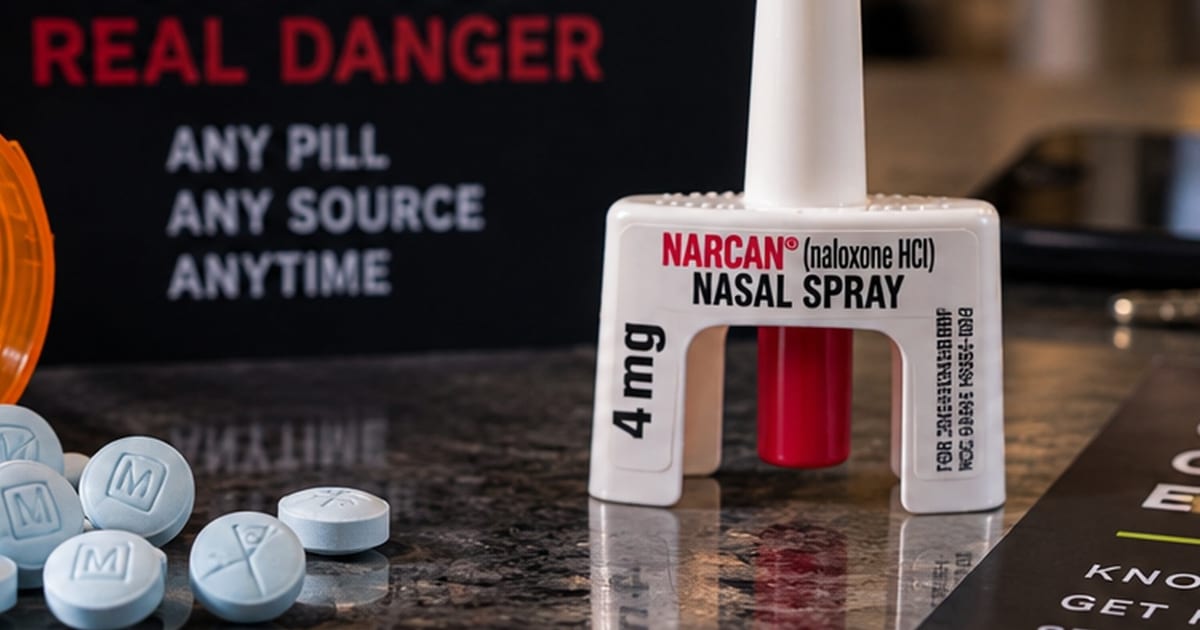
Repeated naloxone doses may be needed. Naloxone (Narcan) is the opioid overdose reversal medication that has saved hundreds of thousands of lives during the fentanyl crisis. Naloxone works by displacing opioids from opioid receptors in the brain. For some nitazene compounds, a single standard naloxone dose may not be sufficient to fully reverse an overdose — multiple doses may be needed. This does not mean naloxone is ineffective against nitazenes; it means that administering naloxone is the beginning of the emergency response, not the end, and that emergency medical care is critical even after naloxone is given. See the CDC nitazene report for further guidance.
Unpredictable distribution. Because nitazenes are often mixed into other substances rather than sold as a standalone product, users have no way to anticipate their presence. Someone who has been using a particular drug supply for months without incident may encounter a batch that contains a nitazene compound without any warning.
Rapid onset. Like fentanyl, nitazenes can produce rapid respiratory depression. An overdose can progress quickly, leaving little time for bystanders to respond.
Warning Signs of a Nitazene Overdose
The signs of a nitazene overdose are similar to those of any opioid overdose, but may progress more rapidly and may be more resistant to reversal:
- Unconsciousness or unresponsiveness — the person cannot be woken up
- Slow, shallow, or stopped breathing
- Choking or gurgling sounds (sometimes called the "death rattle")
- Blue or grayish lips, fingertips, or skin (cyanosis)
- Pinpoint (very small) pupils
- Limp body
- Pale, clammy skin
If you suspect an opioid overdose — including a possible nitazene overdose — call 911 immediately, administer naloxone if available, and be prepared to administer additional doses. Do not leave the person alone. Continue rescue breathing if trained to do so. Emergency medical personnel need to know that a nitazene may be involved so they can respond appropriately.
What Families Should Know About Naloxone and Nitazenes
Naloxone remains the most important tool available for reversing opioid overdoses, including nitazene overdoses. Every family with a loved one who uses opioids — or any illicit drugs — should have naloxone on hand and know how to use it.
However, because some nitazene compounds may require higher or repeated naloxone doses to reverse, families should understand that administering naloxone is not the end of the emergency response — it is the beginning. Even if a person appears to respond to naloxone, they need emergency medical evaluation. Naloxone wears off faster than many opioids, and a person can re-enter overdose after an initial response.
Higher-dose naloxone formulations are available. Families and harm-reduction programs in areas where nitazenes have been detected may want to discuss higher-dose options with a pharmacist or healthcare provider.
Are Nitazenes Being Detected in Your Area?
Nitazene detections have been reported across the United States, with cases documented in dozens of states. The geographic spread has accelerated since 2021. Medical examiners, public health departments, and drug checking programs in many states have confirmed nitazene-involved overdose deaths.
The honest answer to "are nitazenes in my area?" is: they may be, and the absence of a local news story does not mean the local drug supply is safe. Nitazene detections are often identified through medical examiner toxicology reports, which lag behind real-time events. Drug checking services — where available — can test substances for nitazene compounds, but these services are not universally accessible.
The safest assumption for any family with a loved one who uses illicit opioids or counterfeit pills is that the drug supply in their area may contain nitazenes or other dangerous adulterants.
The Counterfeit Pill Problem
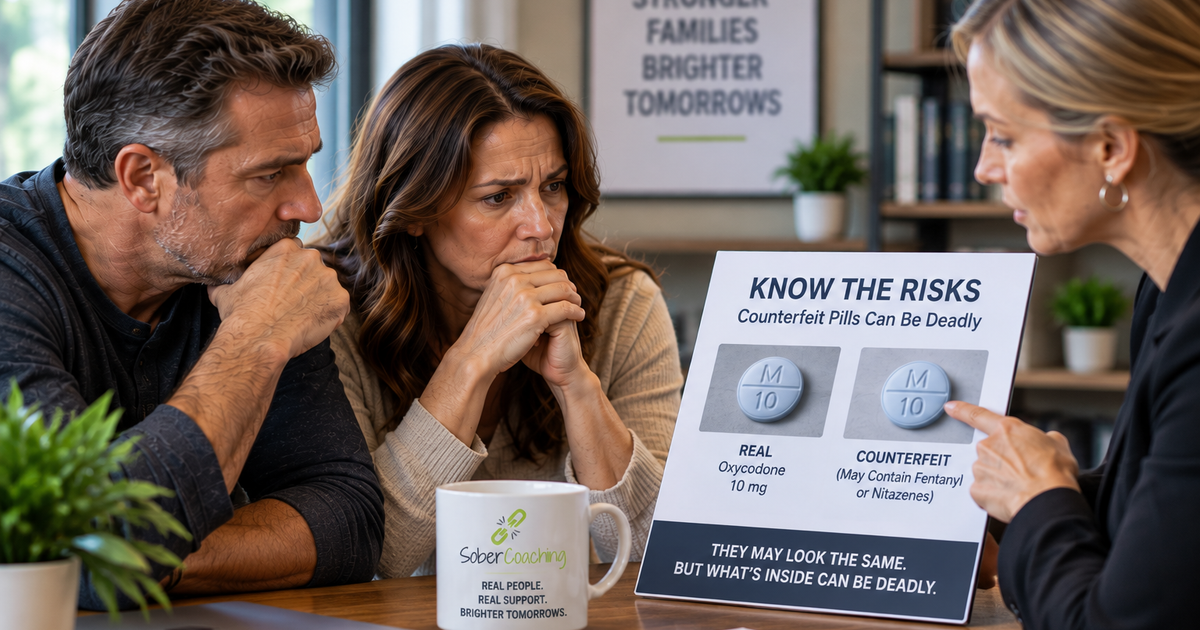
One of the most important things families can understand about nitazenes — and fentanyl before them — is the counterfeit pill problem. Illicit manufacturers press fake pills that are designed to look exactly like legitimate prescription medications: the same shape, color, and imprint as real oxycodone, hydrocodone, Xanax, Adderall, and other commonly misused medications.
These counterfeit pills are sold on the street, through social media, and through other informal channels. A person who believes they are taking a "real" pill they obtained outside of a pharmacy may be taking a pill that contains fentanyl, a nitazene compound, or both. There is no way to tell by looking at a pill whether it is legitimate or counterfeit.
The Drug Enforcement Administration has reported that a significant percentage of counterfeit pills tested contain potentially lethal doses of fentanyl. As nitazenes become more prevalent in the supply, the same risk applies to them.
For families: if a loved one is obtaining pills outside of a licensed pharmacy with a valid prescription, those pills may be counterfeit. That is not a moral judgment — it is a safety fact that can save a life.
How This Changes the Conversation About Recovery
The emergence of nitazenes in the illicit drug supply changes the urgency of the conversation about recovery in an important way. The window of time between active addiction and a fatal overdose has narrowed. The drug supply has become less predictable and more lethal. A person who has been using opioids for years without a fatal overdose is not necessarily protected — the next batch of drugs they encounter may be different from anything they have used before.
This is not meant to create panic. It is meant to underscore that the stakes of active opioid use disorder are higher than they have ever been, and that the time to act — to have a conversation, to seek help, to put a plan in place — is now, not after the next close call.
For families who have been waiting for the "right moment" to intervene, or who have been hoping a loved one will hit bottom and ask for help on their own, the nitazene threat is a reason to reconsider that approach. The bottom may now be fatal before it arrives.
What Families Can Do Right Now
There are concrete steps families can take regardless of where their loved one is in their addiction or recovery:
- Have naloxone on hand and know how to use it. Naloxone is available without a prescription at most pharmacies. Keep it accessible — not locked away — and make sure multiple family members know where it is and how to administer it.
- Learn the signs of opioid overdose. Review the warning signs listed above. Seconds matter in an overdose response.
- Have an honest conversation about counterfeit pills. If a loved one is using pills obtained outside of a pharmacy, they need to understand the counterfeit pill risk. This conversation is difficult. It is also potentially life-saving.
- Consider a professional intervention. If a loved one is actively using opioids and resistant to help, a professionally facilitated intervention can change the trajectory. Waiting is not a neutral choice when the drug supply is this dangerous.
- Explore treatment options proactively. Knowing what treatment options exist — detox, medication-assisted treatment, residential treatment, sober companion support — before a crisis makes it possible to act quickly when a window of opportunity opens.
- Build a support structure around recovery, not just around crisis. The period after treatment is when many people relapse. Having professional support in place — a sober companion, a sober coach, structured accountability — dramatically improves the odds of long-term recovery.
Why Professional Recovery Support Matters More Than Ever
The nitazene threat is a reminder that addiction is a life-threatening condition, not a lifestyle choice or a moral failing. Families who treat it with the same urgency they would bring to any other life-threatening medical situation are more likely to get their loved one the help they need before it is too late.
Professional recovery support — whether through a Sober Companion, a Sober Coach, or Online Recovery Coaching — provides the structure, accountability, and real-world support that makes recovery sustainable. It is not a replacement for treatment. It is what makes treatment stick.
For families navigating a loved one's opioid use disorder in an environment where nitazenes are a real and growing threat, the question is not whether to act. The question is how quickly and how effectively.
How Sober Coaching Can Help
Sober Coaching does not provide medical treatment, detoxification, or clinical care. Our role is to provide the real-world structure and accountability that makes recovery sustainable after treatment — and to help families navigate the process of getting a loved one into treatment when they are ready.
Depending on the circumstances, we can help with Addiction Intervention Services, Rehab Placement, Sober Transport, 24/7 Sober Companion Services, Sober Coaching, and Online Recovery Coaching.
If you have a loved one who is actively using opioids — or any illicit drugs — and you are not sure where to start, call us. We will talk through the situation honestly and help you understand what options are available.
Frequently Asked Questions
What are nitazenes?
Nitazenes are a class of synthetic opioids originally developed in the 1950s that were never approved for medical use. They are now being produced illicitly and are appearing in the drug supply, often mixed into counterfeit pills, heroin, and other substances. Some nitazene compounds are estimated to be significantly more potent than fentanyl.
Are nitazenes more dangerous than fentanyl?
Some nitazene compounds are estimated to be more potent than fentanyl on a dose-for-dose basis, and some may require higher or repeated doses of naloxone to reverse an overdose. The unpredictability of their presence in the drug supply — often without the user's knowledge — makes them particularly dangerous.
Will naloxone work on a nitazene overdose?
Naloxone can work on nitazene overdoses, but standard doses may not be sufficient for some nitazene compounds. Multiple doses may be needed. Administering naloxone and calling 911 immediately remains the correct response to any suspected opioid overdose. Emergency medical care is critical even after naloxone is administered.
How do I know if the drug supply in my area contains nitazenes?
Nitazene detections have been reported across the United States. The safest assumption for any family with a loved one who uses illicit opioids or counterfeit pills is that the local drug supply may contain nitazenes or other dangerous adulterants. Drug checking services, where available, can test substances for nitazene compounds.
What should I do if I think my loved one is using opioids?
Have naloxone on hand and know how to use it. Learn the signs of opioid overdose. Have an honest conversation about the risks of counterfeit pills. Consider a professional intervention if your loved one is resistant to help. Contact a recovery professional to understand what treatment and support options are available.
What is the difference between a sober companion and a sober coach?
A Sober Companion provides intensive, real-time support — often 24/7 — during high-risk periods such as the transition home from treatment. A Sober Coach works on a scheduled basis to build long-term routines, accountability, and relapse-prevention skills. Many clients use companion support first, then transition to coaching as stability improves.